Golfers 50+: Add 15–30 Yards and Build a More Consistent Swing in Just 10 Minutes a Day
Golfers 50+: Add 15–30 Yards and Build a More Consistent Swing in Just 10 Minutes a Day
Follow a proven 6-week system that trains your body, swing, and sequencing together—so you stop guessing, stop chasing random tips, and start building movements you can trust.
Why more swing tips and YouTube drills can actually keep you stuck
Why 10 focused minutes a day can beat longer workouts you won’t stick with
How to train the right movements in the right order until they become muscle memory

You Know Your Golf Game Isn’t What It Used To Be.
Maybe you’ve lost 10, 20, or even 30 yards.
Maybe you’re playing great for six holes and then suddenly can’t make the same swing twice.
Maybe your hips don’t turn like they used to. Your back gets tight. Your shoulders feel stiff.
So you watch another YouTube video. Try another swing thought. Hit another bucket of balls. Maybe even buy another club.
And sometimes it works.
For about 20 minutes.
Then the old swing comes back.
And even when you find something that works, you often move on to the next tip before you’ve repeated it enough for the movement to become muscle memory.
That’s not because you’re too old to play great golf.
It’s because you’re trying to solve only half the problem.
The Problem Isn’t Golf Instruction. And It Isn’t Golf Fitness.
It’s treating your swing and your body like two separate problems—and never repeating the right movements long enough for them to become automatic.
ONLY FIX THE SWING
Lessons
YouTube Tips
Swing Thoughts
Range Work
Any one of these may make perfect sense.
The problem starts when you keep changing what you’re working on before you’ve repeated the right movement enough to make it automatic.
Now you’re standing over the ball thinking about your takeaway... your hips... your hands... your head... your follow-through...
Too many swing thoughts create paralysis by analysis.
Instead of reacting and swinging freely, you’re trying to remember the latest tip.
Real improvement comes from mastering the right movements and repeating them until they become muscle memory.
ONLY FIX THE BODY
Mobility
Strength
Flexibility
Golf Fitness
Getting stronger, more mobile and more flexible absolutely can help.
But a better body doesn’t automatically create a better golf swing.
If you still come over the top, slide, lose your sequence, or rely too much on your arms, you may simply create more speed with the same faulty movement.
You can get stronger, faster and more flexible… and just hit the ball farther into the woods.
More speed without a repeatable movement pattern just makes your misses go farther.
ONLY FIX THE SWING
Lessons
YouTube Tips
Swing Thoughts
Range Work
Any one of these may make perfect sense.
The problem starts when you keep changing what you’re working on before you’ve repeated the right movement enough to make it automatic.
Now you’re standing over the ball thinking about your takeaway... your hips... your hands... your head... your follow-through...
Too many swing thoughts create paralysis by analysis.
Instead of reacting and swinging freely, you’re trying to remember the latest tip.
Real improvement comes from mastering the right movements and repeating them until they become muscle memory.
ONLY FIX THE BODY
Mobility
Strength
Flexibility
Golf Fitness
Getting stronger, more mobile and more flexible absolutely can help.
But a better body doesn’t automatically create a better golf swing.
If you still come over the top, slide or lose sequence, more strength just makes the same bad movement faster.
More speed with the wrong movement sends the ball farther into the woods.
Your body has to learn to use that new mobility, strength and power in your swing.
That’s why body and swing must be trained together—and repeated until the movement becomes automatic.
Both Can Help. Neither Is Complete By Itself.
The missing piece is training them together—and repeating the right movements until they become automatic.
To get your distance and consistency back, your body and your swing have to learn to work together.
That means improving how your body moves, fixing the swing faults that cost you power, and practicing the right sequence often enough for it to become muscle memory.
This isn’t another swing tip. And it isn’t another workout. It’s a system for building the right movements—and repeating them until you can trust them on the course.
See What Happened When Neil Put It All Together
Neil Wood, Hull, MA
Neil was 67 when he sent me this. His normal drives were around 220 yards. After working on the 1-2-3 sequence, his first drive went 246 yards — a 26-yard increase.
Update: Four months later, Neil texted me that he was driving the ball 275+ yards.
How I Discovered The Missing Half
I had already spent years in the fitness business when, in my late 40s, I moved my personal training studio inside Harmon Golf & Fitness.
I wasn’t dropping in once in a while.
I was there every day.
I trained my clients while golf professionals worked with golfers on their swings, and I had a front-row seat to what was happening.
I kept seeing the same problem.
A golfer could be shown exactly what his swing needed to do…
but what if his body couldn’t physically make that move?
So I went deeper into the physical side of golf and became TPI certified through the Titleist Performance Institute.
That showed me the other half.
You could improve a golfer’s mobility, strength, stability and power…
but what if he still came over the top, slid, used too much arms, or moved in the wrong sequence?
Then he was simply becoming more physically capable of repeating the same bad movement.
That was my breakthrough.
Golf instruction wasn’t wrong.
Golf fitness wasn’t wrong.
They were solving two different halves of the same problem.
The golfer didn’t need to choose between fixing his body or fixing his swing.
He needed to train them together.
That realization became the foundation of EagleFit Golf.
Before I Taught This Approach To Anyone Else, I Put It To The Test On Myself
When I turned 50, I wasn’t some naturally gifted golfer with a beautiful swing.
In fact, people who saw my swing used to call me the “human corkscrew.”
I was about a 12 handicap, and something was bothering me.
I was strong. I was fit. Yet I was watching golfers who weren’t as strong as I was—and who I didn’t think were more talented—hit the ball past me.
That made me start questioning everything.
I knew I wasn’t getting everything I could out of either my body or my swing.
So during the New England winter, when I wasn’t playing much golf, I started applying what I had learned at Harmon Golf & Fitness and through my TPI certification to myself.
I trained my body.
I worked on the faults in my swing.
I trained the proper kinematic sequence.
And I repeated those movements until they started becoming muscle memory.
Then spring came.
I went out to play with a golfer I had played with many times before.
He normally outdrove me.
But he hadn’t seen my game in a couple of months.
This time, I hit one past him.
He looked at me and said:
“You must have hit a sprinkler head.”
I hadn’t.
That was my golf ball.
And that was the first moment I really knew something had changed.
He knew my game. He knew how far I normally hit it. And he noticed the difference before I had to tell him anything.
That felt great.
Before long, I was reaching par 5s in two.
I was hitting more of those pure shots—the ones that feel like the club just cuts through the ball like butter.
I gained distance.
I became more consistent.
And over time, I took my handicap from about 12 down to 8—in my 50s.
That’s when I knew this wasn’t just theory.
I wasn’t simply getting stronger.
I wasn’t simply changing my swing.
I was learning how to get my body and my golf swing working together.
And that changed the way I played the game.
Then I started sharing it with others.
Once I saw what was happening in my own game, I began applying the same approach with golfers I trained.
And they started getting results too.
More distance. More clubhead speed. Better ball striking. More consistency. And golfers who finally felt like their body was helping their swing instead of fighting it.
That’s when I realized this wasn’t just something that worked for me.
It was a system I could teach.
The Missing Piece Isn’t More Information. It’s Mastery.
Most golfers already know plenty.
They’ve watched the videos.
Taken the lessons.
Tried the drills.
Bought the training aids.
The problem is they keep changing what they’re working on before the right movements become automatic.
That’s why Power10 is different.
10 Minutes a Day. 6 Weeks. One System.
You don’t need another hundred exercises.
You need the right movements, done in the right order, repeated consistently enough to become muscle memory.
That’s why the first weeks deliberately repeat some of the basics.
Not because you need more variety.
Because you need mastery.
This is exactly how I coach people one-on-one.
People pay me thousands of dollars for personal coaching, and I don’t spend every session showing them something new.
We repeat the right movements over and over until they can do them correctly without having to think about them.
Sometimes we’ll work on the same movement for several sessions—or several weeks.
Once they own it, we move to the next piece.
That’s how real progress is built.
Your body learns the movement.
Your swing learns the movement.
Your sequencing learns the movement.
Then we build on it.
Mobility. Stability. Strength. Power. Swing faults. Kinematic sequence.
Each step stacks on the one before it.
So instead of standing over the ball trying to remember another tip…
you start making the right movement without having to think about it.
That is the whole point of Power10.
Train the right movements. Repeat them. Make them automatic.
This is the foundation of the Power10 Golf Performance System.
Secret # 1: Why Another Swing Fix May Not Stick
You can get a lesson, watch a great video, make one small adjustment…
…and suddenly start hitting the ball better.
For a while.
Then a few holes later—or a few days later—the old swing comes back.
That doesn’t mean the lesson was bad.
It may mean your body can’t make the movement consistently yet—or you simply haven’t repeated the correct movement enough times for it to become automatic.
If your hips are tight, your shoulders don’t turn well, your balance is off, or you lack the strength and stability to hold the right position…
your body will find another way to get the club to the ball.
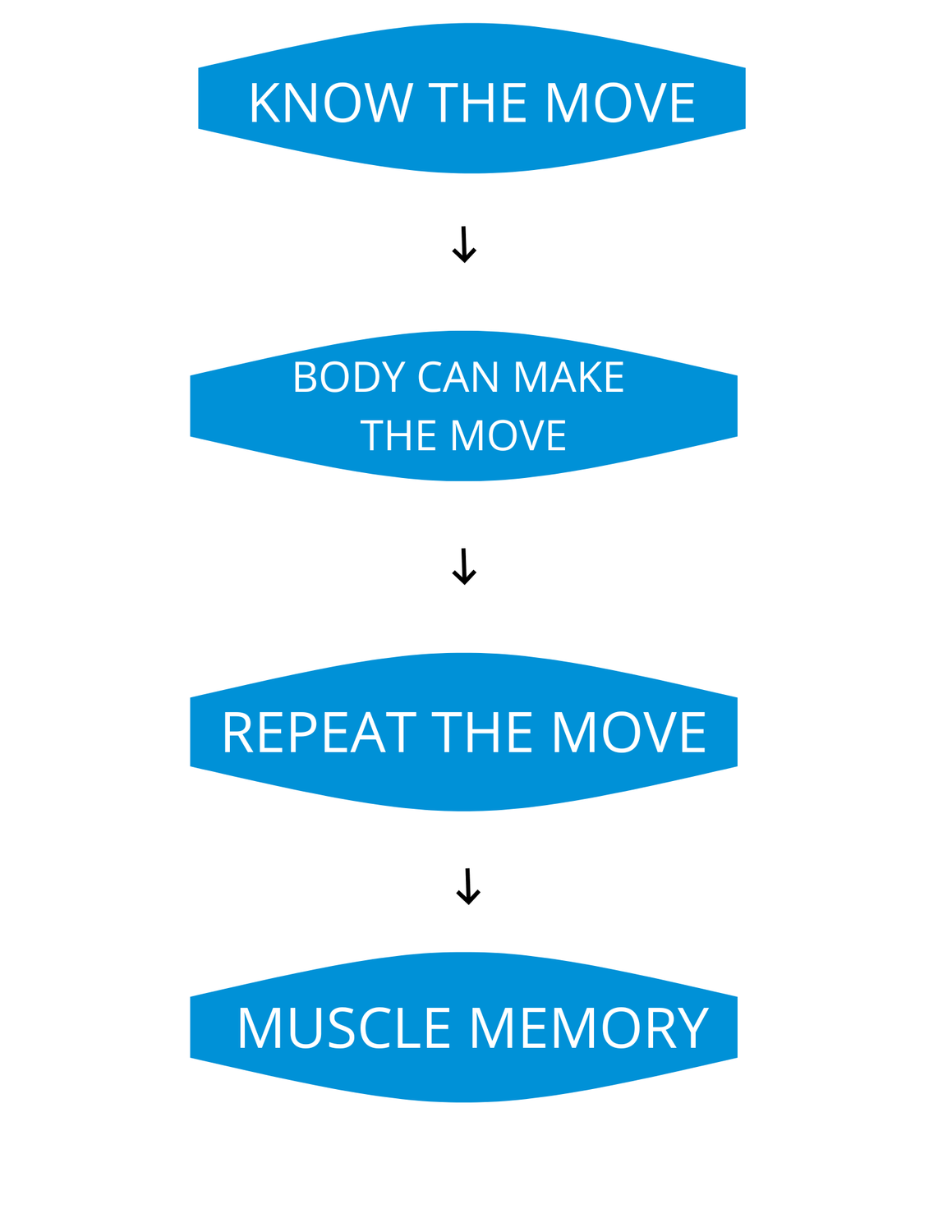
That’s where compensations start.
And once you’ve repeated those compensations enough times, they become the movement your body naturally falls back on.
That’s why knowing what to do isn’t the same as being able to repeat it.
You don’t need another six swing thoughts running through your head.
You need a body that can actually make the movement—and enough correct repetition that the movement starts becoming muscle memory.
That’s when a swing change has a chance to stick.
Imagine standing over the ball and trusting your swing instead of trying to remember it.

"In just a matter of weeks, I'm driving the ball 20 to 30 yards longer, and went down 3 belt notches.
I had no idea it would be this easy."
M.D., Abington, MA
Secret #2 Why Getting Stronger And More Flexible Isn’t Enough
Getting stronger can help.
Improving your mobility can help.
Creating more speed can definitely help.
But none of those things automatically teach you how to use that new ability in your golf swing.
You can get stronger and still come over the top.
You can become more flexible and still slide.
You can create more speed and still swing mostly with your arms.
Because having more physical ability isn’t the same as knowing how to use it.
Your body has to learn how to apply that strength, mobility and speed in the right order.
And like I said earlier…
you may just hit the ball farther into the woods.
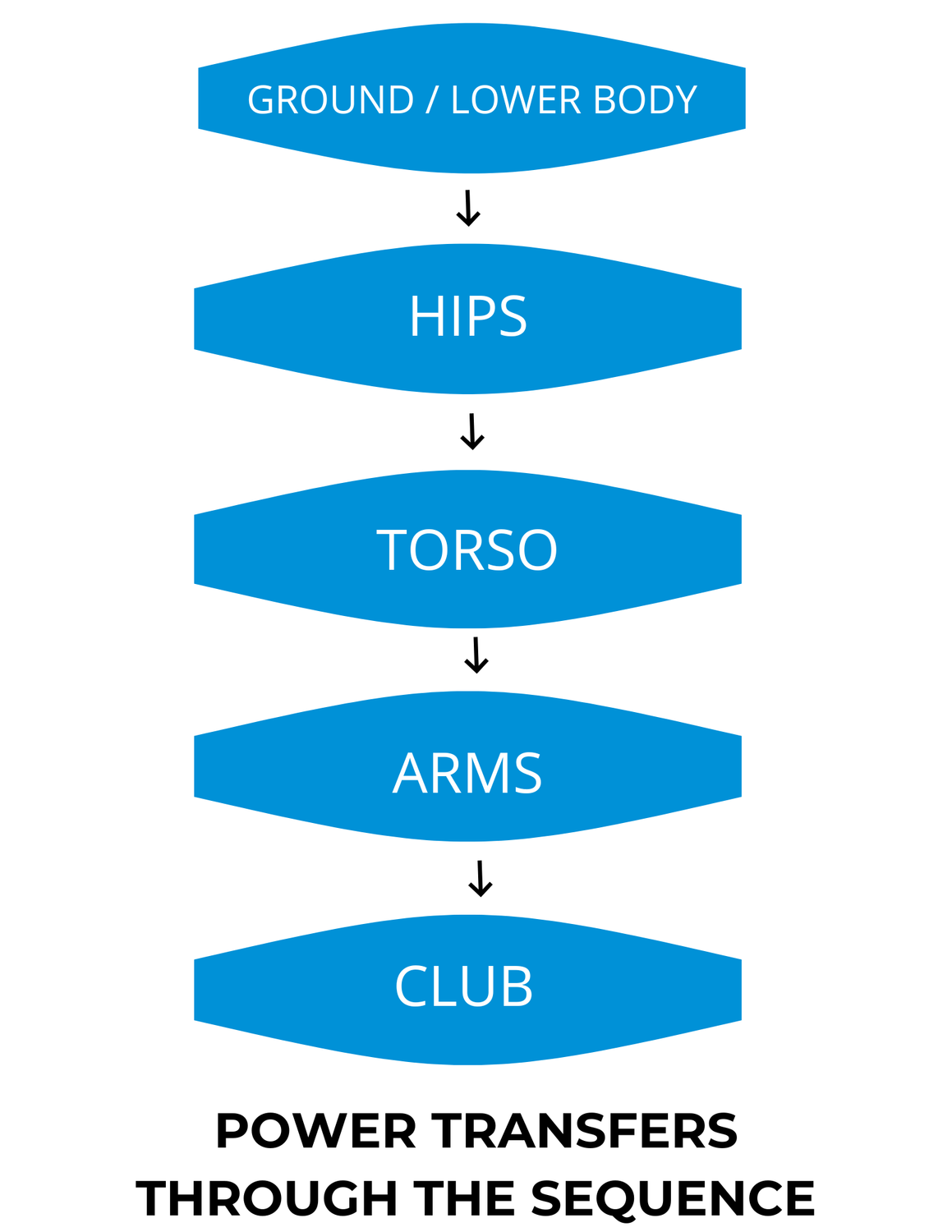
But there’s one more piece most golfers never train.
A powerful golf swing happens in a specific order.
Power begins from the ground and moves through your lower body and hips… then your torso… then your arms… and finally the club.
That coordinated order and timing is called the:
KINEMATIC SEQUENCE
Here’s the part that matters to you:
The right muscles have to fire at the right time.
When the sequence works, your body transfers energy through the swing instead of forcing everything with your arms.
When the sequence gets out of order, you leak power.
You lose consistency.
And when your body has wear and tear on the chassis, it starts compensating just to get the club back to the ball.
That’s why two golfers can have similar strength and flexibility…
yet one creates effortless speed while the other looks like he’s swinging as hard as he can.
The difference isn’t just how strong they are.
It’s how well they use what they have.
And this is why EagleFit Golf doesn’t just make you stronger or more flexible.
The exercises and swing-specific drills are designed to help your body use those improvements inside the actual golf movement.
You’re not training muscles just to train muscles.
You’re training them to work together in the sequence your golf swing needs.
Imagine creating more speed without feeling like you have to swing harder.
"EagleFit Coaching developed a specific plan to correct and improve my performance. As a result, I've increased my speed from 96 mph to 103 mph, gaining an average 20-30 yards off the tee."
Andrew Thiel,
Cohassett, MA
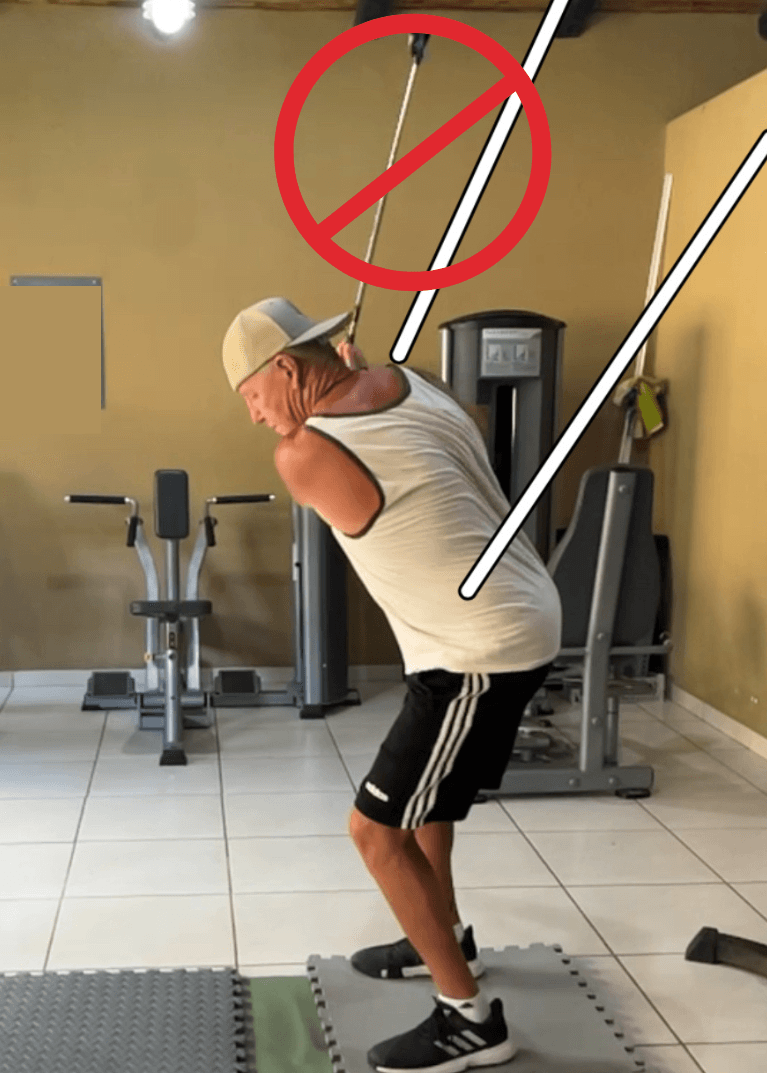
Example: An Over-The-Top Swing Fault
Secret #3: The Missing Link — Train Your Body And Your Swing Together
Most golfers train these as separate things.
They stretch over here.
They lift weights over there.
Then they go to the range and work on their swing.
But nothing connects the pieces.
That’s the missing link.
Your body may become stronger and more mobile.
Your swing may improve for a while.
But if you don’t train the right movement, in the right sequence, and repeat it enough times to become muscle memory, the old pattern can come right back.
Power10 brings those pieces together in a specific order.
IDENTIFY THE FAULT
↓
TRAIN THE BODY
↓
TRAIN THE SEQUENCE
↓
REPEAT THE CORRECT MOVE
↓
MUSCLE MEMORY
Secret #3: The Missing Link — Train Your Body And Your Swing Together
Most golfers train these as separate things.
They stretch over here.
They lift weights over there.
Then they go to the range and work on their swing.
But nothing connects the pieces.
That’s the missing link.
Your body may become stronger and more mobile.
Your swing may improve for a while.
But if you don’t train the right movement, in the right
sequence, and repeat it enough times to become muscle memory, the old pattern can come right back.
Power10 brings those pieces together in a specific order.
Example: An Over-The-Top Swing Fault
IDENTIFY THE FAULT
↓
TRAIN THE BODY
↓
TRAIN THE SEQUENCE
↓
REPEAT THE CORRECT MOVE
↓
MUSCLE MEMORY
This is why EagleFit Golf uses swing-specific exercises and drills—not just traditional workouts.
You’re training your body to make the movements your golf swing actually needs.
Some drills isolate one piece of the swing.
Then you put the pieces back together and repeat them until the movement starts becoming muscle memory.
Instead of standing over the ball thinking about six different positions…
you’ve already practiced the movement before you ever hit the shot.
That’s when the body and the swing start working together.
And that’s why distance and consistency can begin changing surprisingly fast.
Sometimes you already have more power than you’re using.
You simply have to learn how to deliver it in the right sequence.
Imagine stepping onto the course with one swing you trust—instead of six swing thoughts you’re trying to remember.
"The BEST Golf Fitness Training Ever!"
"I've been doing this for a long time. I've never hit the ball so well with easy swing thoughts. The change is amazing. I focus and release my hips. It's like magic!"
Carlos Rojas Soto, Golf Professional

What Happens When Your Body And Swing Finally Work Together
More distance doesn’t just mean a bigger number on the launch monitor.
It means hitting an 8-iron into a green where you used to need a 5-wood.
It means having a chance to reach that par 5 in two.
It means standing on the tee with your buddies and knowing you can still get it out there.
More consistency means fewer wasted shots.
More of those pure strikes that feel like the clubhead just cut through the ball like butter.
Fewer rounds where you spend four hours wondering which swing is going to show up.
And when you start hitting more greens, making more pars and eliminating the blow-up holes…
your scores and handicap can finally start moving in the right direction.
But there’s another benefit that matters more the older you get.
You’re building the mobility, flexibility, stability, strength and movement your body needs to keep playing this game.
Not just this season.
For years.
So you can still walk onto the course in your 70s and 80s, play 18 holes, take golf trips, compete with your friends—and hopefully someday tee it up with your kids and grandkids.
And yes, there can be benefits off the course too.
More energy.
A stronger, more athletic body.
Clothes that fit better.
More confidence when you tuck your shirt in.
But those are side effects.
The real goal is simple: keep playing better golf for as long as you possibly can.
"I have more flexibility in my lower body now with EagleFit Coaching has a unique way of motivating me to get results along with a better swing and game. And I lost 10 pounds and 2 inches off my waist, which is a nice side-effect."
Ben Day, North American
Pro Golf Tour Member
Why You Can Trust This Approach
I’m Michael Sassorossi. I’m 65, and I’ve spent nearly three decades in fitness and performance training.
I earned my first personal-training certification in 1996, later became certified through the Titleist Performance Institute, and spent years working inside Harmon Golf & Fitness, where I was able to study both sides of the problem—how golf professionals teach the swing and how the body affects the golfer’s ability to make that swing.
Over the years, I’ve owned gyms, personal-training and wellness businesses in two countries and trained hundreds of people—from everyday golfers to club champions, golf professionals and a PGA Hall of Famer.
But the proof that matters most is this: I use this approach myself.
I built it because I needed it.
I proved it on my own game.
Then I began teaching it to other golfers—and they started getting results too.
Mike Clifford, Sports Bar Owner and Senior Club Champion
REAL RESULT FROM A GOLFER IN HIS 70s
A 71-year-old New England PGA Hall of Famer who competed in the U.S. Open and PGA Championship came to me barely able to play once a week because of pain.
After 6 weeks:
✓ Played 3 days in a row pain-free
✓ Shot scores in the 60s again
This isn’t theory. It’s what happened when we worked on how his body moved and performed for golf.
That’s Why I Created the Power10 Golf Performance System
I built Power10 around one idea:
You don’t need more information. You need a system you can actually follow long enough to master the right movements.
That’s why Power10 is built around 10 focused minutes a day for 6 weeks.
Not random workouts.
Not a different drill every day just to keep things interesting.
And not another pile of swing tips to remember.
You train the body. You train the swing. You train the sequence. Then you repeat the right movements until they start becoming muscle memory.
During the first three weeks, I slow things down and teach the movements individually so you understand exactly what you’re doing.
You work on mobility, stability, strength, swing faults and the proper kinematic sequence.
And yes, you’ll repeat some of the basics.
That’s intentional.
Because the goal isn’t to constantly show you something new.
The goal is mastery.
Once you’ve learned those movements, Weeks 4 through 6 become much more automatic. Instead of stopping to learn every exercise separately, you follow along with me through complete 10-minute routines.
Now you’re taking what you learned and putting it together.
Learn it. Repeat it. Master it. Then build on it.
That is how I coach people one-on-one, and it’s how Power10 is structured.
You don’t need hours in the gym.
You need the right movements, in the right order, repeated consistently enough for them to become automatic.
The goal is to help you become a better golfer.
More distance.
More consistent ball striking.
Lower scores.
A body that moves better.
And a golf game you can continue enjoying for years to come.
Here’s exactly what you get inside the EagleFit Golf Power System:
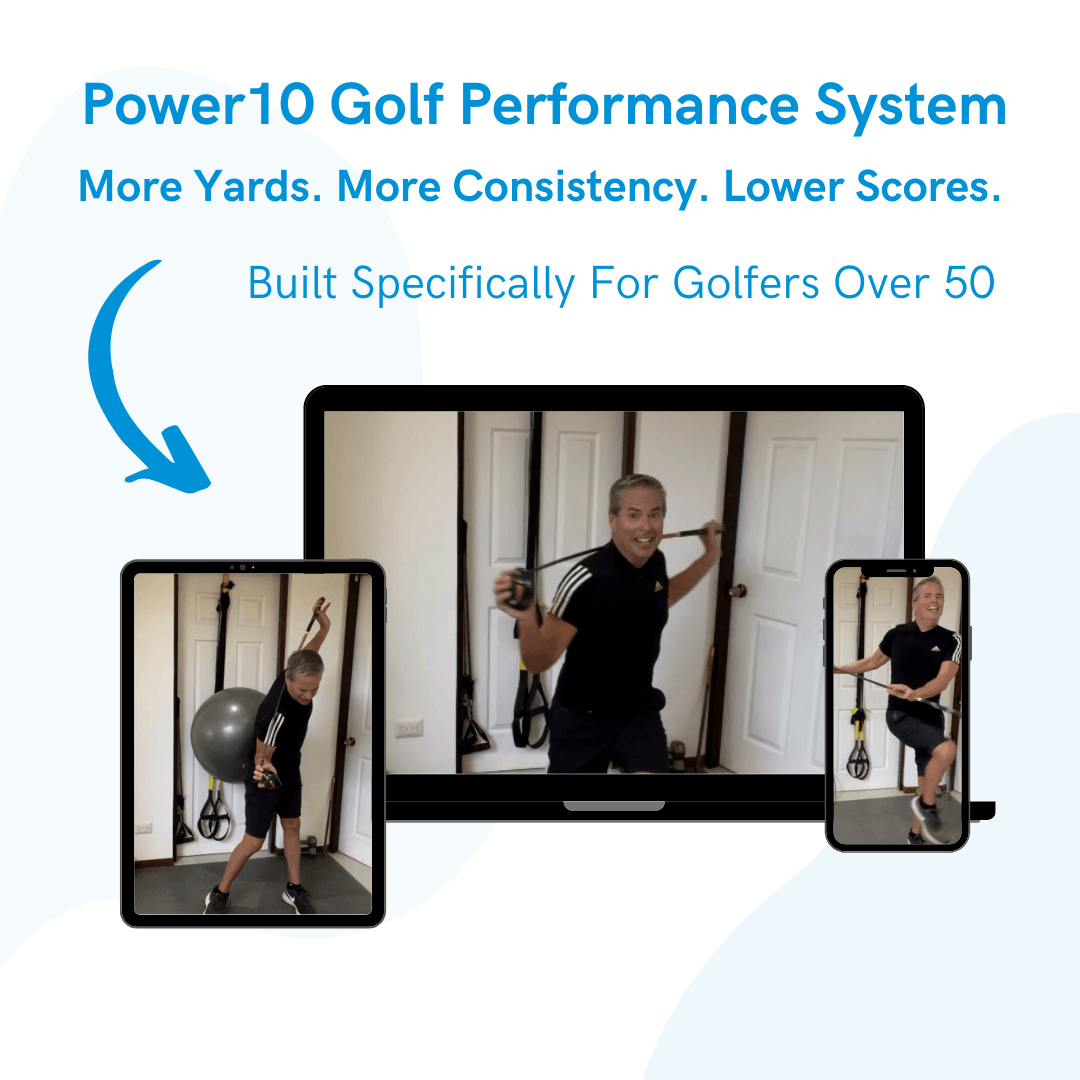
4 Training Modules
A structured program that organizes the exercises, drills, routines and mobility work so you know exactly what to do and where to find it.
30 Video Lessons
Short, clear instruction showing you what to do, why you’re doing it and how it relates to your golf game.
76 Golf-Specific Exercises & Drills
Build the mobility, flexibility, stability, strength and power your golf swing needs—not random gym exercises that never make it onto the golf course.
Follow-Along Golf Fitness Routines
Train right along with me instead of trying to figure out which exercises to do or build your own workout from a library of drills.
Swing-Fault Correction Drills
Fix common faults like coming over the top, sliding and other compensations that can cost you distance, consistency and solid contact.
Kinematic-Sequence Training
Learn to use your body in the proper order so power travels from the ground, through your body and into the club instead of relying mostly on your arms.
Swing-Specific Movement Drills
Practice pieces of the golf swing separately, put them back together, and repeat the correct movements until they begin becoming muscle memory.
Quick Training Options
Use short drills when you only have a few minutes or longer routines when you have more time.
The program fits your schedule instead of requiring your schedule to fit the program.
Everything inside has one job: help your body produce a better golf swing.
And You’ll Also Get These 3 Golf-Performance Bonuses
Each bonus was chosen for one reason: to help you get more out of the program and play better golf.
BONUS #1: Five Putting Keys to Lower Scores
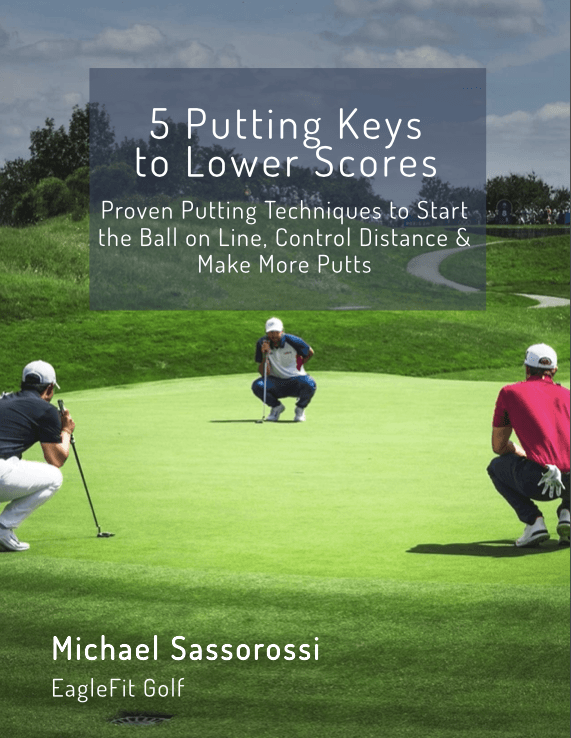
Proven Putting Techniques to Start the Ball on Line, Control Distance & Make More Putts
You can hit the ball farther and strike it better—but if you keep giving shots away on the greens, your scores won’t come down nearly as fast.
That’s why I created 5 Putting Keys to Lower Scores.
Inside, you’ll learn how to:
✓ Start the ball on your intended line
✓ Control distance so you leave yourself fewer stressful comeback putts
✓ Read the break from both sides before you commit to your line
✓ Build a putting stroke you can repeat under pressure
✓ Use the Read–Aim–Feel–Trust pre-putt routine so you stop overthinking once you stand over the ball
PLUS: I’ll give you a simple 10-minute putting practice routine that brings all five keys together.
Because sometimes the fastest way to lower your score isn’t adding another 10 yards. It’s making one or two more putts.
BONUS #2: Weekly Planner & Motivation Guide
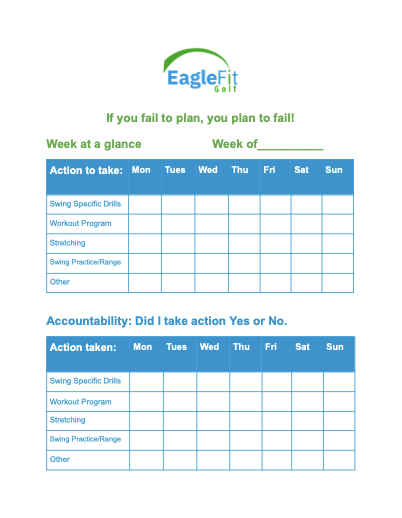
Turn Good Intentions Into Consistent Action
Most golfers know they should work on their body, practice their swing and spend time on the range.
The problem is actually doing it consistently.
That’s why I created the Weekly Planner & Motivation Guide—to give you a simple way to plan your week, track what you actually did, and keep yourself accountable.
Inside, you’ll be able to:
✓ Plan your swing drills, workouts, stretching and practice time for the week
✓ Check off what you actually completed so you can see whether you’re following through
✓ Use a simple accountability system that forces you to answer yes or no: Did I take action?
✓ Get clear on the real reason you want to improve your golf, fitness and health
✓ Use the What–What–Why exercise to connect your weekly actions to the bigger result you actually want
Because the best program in the world can’t help you if you don’t use it. This planner helps turn the EagleFit Golf Power System into something you actually do—not another course you buy and forget.
BONUS #3: Golf Performance Nutrition Guide

Fuel Your Round. Maintain Your Energy. Recover Better.
Golf takes several hours.
If you start under-fueled, forget to hydrate, or grab whatever happens to be available at the turn, your energy and concentration can disappear long before the 18th hole.
That’s why I created the Golf Performance Nutrition Guide—to show you practical ways to fuel before, during and after your round without making nutrition complicated.
Inside, you’ll learn how to:
✓ Choose pre-round meals designed to give you steady energy without feeling heavy
✓ Hydrate before and during your round and replace fluids lost on the course
✓ Pack easy mid-round snacks so you’re not running on empty by the back nine
✓ Choose post-round meals with protein and nutrient-dense foods to support recovery
✓ Use practical meal plans, snack ideas and recipes instead of trying to figure out what to eat on your own
Because better golf doesn’t stop with your swing. What you eat and drink affects how you feel, focus and perform from the first tee to the 18th green.
Here’s Everything You Get Today
EagleFit Golf Power System
4 Training Modules
30 Video Lessons
76 Golf-Specific Exercises & Drills
Follow-Along Routines
Swing-Fault Correction
Kinematic-Sequence Training
BONUS #1: Five Putting Keys to Lower Scores
Proven putting techniques plus the 10-minute putting practice routine.
BONUS #2: Weekly Planner & Motivation Guide
Plan your training, track your actions and hold yourself accountable.
BONUS #3: Golf Performance Nutrition Guide
Pre-round fueling, hydration, mid-round snacks, recovery meals, meal plans and recipes.
One More Power10 Result Before You Decide
Jim Sassorossi — Power10 Member & My Brother
Full disclosure: Jim is my brother. He was also one of the people most skeptical about Power10. He had spent an entire winter following another golf program that trained movement patterns that made his golf game worse — and it took him a long time to undo what he had practiced.
After just one week of Power10, 10 minutes a day, he sent me this:
After that first week, Jim shot a 76 — his first round in the 70s in years. He says he had been stuck around 240 yards off the tee and was now consistently hitting drives in the 270–280 range. That’s roughly 30–40 yards of added distance. He also regained about 10 yards with his irons.
That’s what can happen when you stop guessing and start training the right movements in the right sequence.
One More Power10 Result Before You Decide
Jim Sassorossi — Power10 Member & My Brother
Full disclosure: Jim is my brother. He was also one of the people most skeptical about Power10. He had spent an entire winter following another golf program that trained movement patterns that made his golf game worse — and it took him a long time to undo what he had practiced.
After just one week of Power10, 10 minutes a day, he sent me this:
After that first week, Jim shot a 76 — his first round in the 70s in years. He says he had been stuck around 240 yards off the tee and was now consistently hitting drives in the 270–280 range. That’s roughly 30–40 yards of added distance. He also regained about 10 yards with his irons.
That’s what can happen when you stop guessing and start training the right movements in the right sequence.
The Complete Power10 Golf Performance Package
Power10 Golf Performance System — $497 Value
BONUS #1: Five Putting Keys to Lower Scores — $47 Value
BONUS #2: Weekly Planner & Motivation Guide — $27 Value
BONUS #3: Golf Performance Nutrition Guide — $47 Value
TOTAL VALUE: $618
The Complete Power10 Golf Performance Package
Power10 Golf Performance System$497 Value
Five Putting Keys to Lower Scores$47 Value
Weekly Planner & Motivation Guide$27 Value
Golf Performance Nutrition Guide$47 Value
TOTAL VALUE: $618
Get Everything Today For Just $147
One payment. Get Power10 + all 3 golf-performance bonuses.
100% SECURE CHECKOUT

100% SECURE CHECKOUT
Try the Power10 Golf Performance System for 30 Days — Risk Free
If you’re not satisfied, you get your money back. No questions asked. No explanation needed.
Go through the lessons. Try the exercises and drills. Use the routines. Put the system into practice.
If at any point during the first 30 days you decide the Power10 Golf Performance System isn’t right for you, simply email
support@eaglefitgolf.com and I’ll refund your purchase.
You have 30 days to decide. The risk is mine.

Still Wondering If Power10 Will Work For You?
Here are the questions I hear most often from golfers over 50.
“What if I’m too old, stiff or out of shape?”
That’s exactly who Power10 was built for. You don’t need to move like a 25-year-old or already be in great shape. You start where your body is today and build the mobility, stability, strength and movement patterns your golf swing needs.
“What if I don’t have much time?”
That’s exactly why Power10 is built around 10 focused minutes a day. You don’t need hour-long workouts. Follow the 6-week system and build the right movements without having to rearrange your life around your training.
“Do I need a gym or a bunch of equipment?”
No. Many of the exercises and drills can be done at home with simple equipment, and I give you options depending on what you have available. You can also use the program in a gym if you prefer.
“What if I’ve already tried golf lessons, YouTube videos or golf-fitness exercises?”
That’s exactly why Power10 is different. Instead of giving you another collection of tips or exercises, it gives you one progressive 6-week system to follow. You train your body, your swing and your sequencing together, then repeat the right movements consistently enough for them to become muscle memory.
How soon can I expect to see results?
Some golfers notice a difference in the first week, especially when they improve a swing fault or start using their body in the proper sequence. Building mobility, strength and better movement patterns takes longer. That’s why Power10 gives you a full 6-week progression—to help you build on those early changes and make them more consistent.
“What if I’m not very athletic?”
You don’t have to be athletic to use Power10. I use many of these same movements and training principles with professional golfers, teaching pros and high-level athletes—the difference is how they’re progressed for the individual. Power10 teaches the movements step by step, gives you options when needed, and lets you start at your current level. The goal is to master the right movements and build from there.
You don’t need a perfect body or a perfect swing. You need a system that helps both work better together.
REAL RESULTS FROM A GOLFER IN HIS 70s
Bill Genenatossio — Age 77
Senior Club Champion
Bill is proof that getting older doesn’t mean you have to stop working on your body, your swing, or your game.
Your Best Golf Doesn’t Have to Be Behind You
You’re not buying another collection of random exercises or another swing tip to try at the range.
You’re getting a system designed to help your body and your golf swing work better together—so you can get more from the game you love.
✓ Hit the ball farther with the physical ability you already have
✓ Build a more consistent, repeatable swing
✓ Move better and play with less stiffness and discomfort
✓ Lower your scores and enjoy the game more
✓ Keep playing strong for years to come
Whether your goal is to outdrive your buddies, lower your handicap, play better golf with your kids or grandkids, or simply keep enjoying this game as long as possible—that’s what Power10 was built to help you do.
Get the complete Power10 Golf Performance System + all 3 bonuses today for just $147.
You’re not buying another collection of random exercises or another swing tip to try at the range.
You’re getting a system designed to help your body and your golf swing work better together—so you can get more from the game you love.
✓ Hit the ball farther with the physical ability you already have
✓ Build a more consistent, repeatable swing
✓ Move better and play with less stiffness and discomfort
✓ Lower your scores and enjoy the game more
✓ Keep playing strong for years to come
Whether your goal is to outdrive your buddies, lower your handicap, play better golf with your kids or grandkids, or simply keep enjoying this game as long as possible—that’s what the EagleFit Golf Power System was built to help you do.
Get the complete EagleFit Golf Power System + all 3 bonuses today for just $147.
100% SECURE CHECKOUT
Copyright © 2026 Michael Sassorossi Coaching • All Rights Reserved